copyright © Jedo Dre 2011



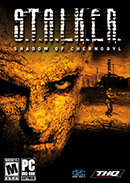
S.T.A.L.K.E.R.
Shadow of Chernobyl
Rati ng:
Impact: Very memorable


 S.T.A.L.K.E.R. is ultimately fun, but it's very far from ultimate fun due to countless
shortcomings. (detailed review) S.T.A.L.K.E.R. is special for many reasons. It is
easily the pinnacle of today's Eastern European gaming industry, which is not that
big. It also had some interesting features, which when released on the net together
with screenshots of the game, excited many gamers. Their excitement would cool off
ten times over before the game actually got released a couple of years after its
originally planned deadline. But in 2007 the heavens opened up and we got blessed
with S.T.A.L.K.E.R. Shadow of Chernobyl. What has come out of the six years of development?
S.T.A.L.K.E.R. is ultimately fun, but it's very far from ultimate fun due to countless
shortcomings. (detailed review) S.T.A.L.K.E.R. is special for many reasons. It is
easily the pinnacle of today's Eastern European gaming industry, which is not that
big. It also had some interesting features, which when released on the net together
with screenshots of the game, excited many gamers. Their excitement would cool off
ten times over before the game actually got released a couple of years after its
originally planned deadline. But in 2007 the heavens opened up and we got blessed
with S.T.A.L.K.E.R. Shadow of Chernobyl. What has come out of the six years of development?
STORY
In 2012 the still somewhat radioactive territory around the Chernobyl Nuclear Power Plant is densely populated, this time by the military and volunteers who arrived at the site because of certain recent developments. Apparently, the territory started producing anomalies, which in term started producing extraordinary artifacts with extraordinary qualities, and these artifacts have become of great value. Unfortunately, on this territory, known as "The Zone”, quite a few mutants have started to make life for anyone venturing into the place very difficult. Aside from the mutants, the many people with contradicting goals, stuffed into such a small area, were bound to start conflicting, thus making the Zone all the more hostile. In this time and place a man gets rescued after a car crash, only to wake up with amnesia and a strange mission. His story will be yours to develop. All in all, this is an interesting plot. No other game comes to mind that has dealt with the Chernobyl’s aftermath, even though it’s the most original source for all the scary myths created or exploited by movies that dealt with Radiation.
GAMEPLAY
1. Overview
S.T.A.L.K.E.R. consists of several separately loaded levels that together form a single large map. Each of the smaller maps is fairly large and somewhat square, thus leaving space for exploring and maneuvering. New territories become accessible as the main quest progresses. These somber locations are inhabited by members of different factions as well as mutant monsters. Of course, since many of the factions have highly contradicting goals, armed conflict with some of them becomes unavoidable. The player can become friends or enemies with some of these factions. Actually, out of the five or six factions roaming around the Zone, only a couple are able to change their stance towards the player. This is one of the first hits to the highly advertised freedom of choice and action. It will most definitely not be the last.
The player can accept different missions from several characters. These missions range from assassinations to treasure hunting; most of these, however, feel quite repetitive. Repetitive on its own wouldn’t be such a problem if many of them weren’t also broken. Certain already completed quests will appear as active missions again, even though the player never accepted to repeat these. Failure to act these missions out will, subsequently, result in the mission’s failure, which is very depressing. At one point the objective wasn’t located where it was reported to be. Instead, a marker was added in a place where it wasn’t supposed to be, and no, it wasn’t there either. What a mess...
The player can also go treasure hunting for different objects scattered around the Zone, to later sell the goodies to one of the traders. Stalkers you come across as well as dead bodies leave clues to hideaways with hidden items. Although some things are very hard to get a hold of, in general, there's no shortage of objects that can be used or sold.
Over the course of the game, the player can earn quite a lot of rubles (Russian currency). These, however, are rarely given any worth, as most of the things that can be bought can also be found for free, while other things that the player would want to buy are never available for sale. In fact, there's at least one ending of the game that punishes a rich player (ironic as it is hard not to become rich). Thus we see that this potenitally interesting reward system is not well implicated.
Finally, there’s the main quest, which depending on the player’s actions, can be ended in several ways. Only a couple of endings can be called positive. Freedom of choice is nice, but here too, the game managed to mess up. The first problem is that there aren’t many clues to indicate an alternative path. The second, and more important problem, is that different endings create massive differences in gameplay. So massive, in fact, that there can be an extra several hours of playing between two endings. That’s a lot considering that the main quest only takes an average of ten hours. Many of S.T.A.L.K.E.R. players have given angry reactions on forums after “finishing” the game because it ended very abruptly and negatively, without providing any answers to the main quest’s main questions. It was the careless way these people played their game that brought them to this ending, but it is still the developers’ fault as they didn’t see the obvious don’ts in building such a game.
Another such "don't" is a sandbox game (a game with non-
Nonetheless, the way to the end of the main quest is really gripping. S.T.A.L.K.E.R.
is definitely not an empty-
2. Enemies
As the game advances, a variety of enemies will get in the player’s way. These consist of human enemies, mutant monsters and something in between. The enemies, in particular the mutants, are fairly original in both looks and behavior. Some of these use optic camouflage while others attack your mind.
Enemy AI is somewhat controversial. When the player is discovered by an enemy group, the group will open fire and tactically advance towards their target, while communicating amongst themselves and using the available cover, retreating to it if they have to reload or run away from a grenade: quality behavior so far, but now the coin turns. AI characters seem to carry grenades, yet they never use them. Also, once the player is spotted up close, the enemies seem to turn into cyborgs with super fast reflexes, as they’ll start shooting the very millisecond they appear in a doorway, managing to hit you before they disappear the next second. Then again, at other times, they'll get a change of heart in the midst of battle, as they’ll come out of their cover and not shoot at all, even though the player might be only feet away. And yet at other moments, they seem to be so aggressive that, without even having seen their target yet, they start shooting at the wall that separates them and the player.
3. Weapons and gear
Quite a large selection of weapons and gear is available to the player to help in
such a hostile environment. Different suits of armor protect differently from each
hazard of the Zone. From sniper rifles to grenade launchers to automatic rifles with
modifications, there’s plenty of weapons to choose from…theoretically. Practically
however, many of the players who have finished the game would probably raise their
eyebrows in astonishment if they were told about all of the weapons or items they
missed. Developers failed to take full advantage of their own creations, as some
of the things are too hard to attain. Because the starting player has little internal
way of knowing about these more rare weapons, he wouldn’t even know what to look
for, let alone where. When (often by chance) the player finds a rare weapon or a
modification for a weapon, no guarantees are given that he will actually find the
ammunition for it, and so one might end up with an M203 grenade launcher under his
rifle the only purpose of which is to obstruct a large part of the player's view.
This sad situation is amplified by the fact that weapons wear down. It’s a realistic
concept, however there’s no way of repairing things (even though there are characters
who claim to be repairmen and there’s equipment apparently used for such repairs).
Unique hard-
4. Realism
Realism, much like everything else, is a double edged sword in STALKER. On one side,
you’ve got advanced ballistics where bullets from different rifles fall at a different
rate and a different speed and even seem to bounce of the ground. These ballistics
were highly talked about by both the developers and the players. On the other side,
the fall rate of some weapons feels a bit over exaggerated. VSS Vintorez, a short-
5. Dynamic world
S.T.A.L.K.E.R. is hyped to be a dynamic world. One of the most talked about features of the game is the dynamic system which replaces the losses of the fighting groups with reinforcements. It was so eagerly talked about (and even used as an excuse for the delay in the game's release) that it’s easy to forget that randomly respawning AI that run to a location to replace losses is nothing new in a game. Nevertheless, the world as a whole in S.T.A.L.K.E.R. does have a dynamic feel to it. Not just the AI but also the artifacts spawn more or less randomly. While some AI spawn in the same spot, the player might come across a new monster in a spot that was clear just minutes ago. There’s a night and day change, and during the night the surface has more monsters but less guards, many of whom go to sleep. AI characters do more than that. Characters (who all have their own names and aliases, by the way) eat, play music, talk to themselves and others. The world around you does seem to have some life of its own, where you feel like a part rather than the center.
VISUALS
At the time of its initially planned release, S.T.A.L.K.E.R. looked pretty good. It wasn't revolutionary, but it attracted the eye. Time has passed and the game wasn’t coming out. The world moved on with games like Elder Scrolls Oblivion and Advanced Warfighter stealing the show. Now, a couple of years later, is the game still up to date with its graphics? Yes and no. The “no” part, again, is mostly to blame on the manner of implication of what’s available, but so is the "yes" part.
S.T.A.L.K.E.R. can look good. It features some good dynamic lighting that, when combined
with the detail of textures and special effects, is more than capable of creating
eye candy. It was enjoyable….for a whole of seven seconds. After those several seconds
of the PC trying to turn the appearing on-
It’s not the size that matters, but the way you use it. Most importantly, it’s not the quality of the textures that make the S.T.A.L.K.E.R.’s visuals shine but the way those visuals are used. The Zone’s grim character is well depicted through frequent rains, thunderstorms (with extra lightning), trash, ruined civil property, and countless special effects like the grass that waves in the wind at different speeds. This grimness is in contrast to the feeling you get when taking a sit with a few other stalkers who are telling jokes by the camp fire. In abandoned laboratories there’s a lot of attention to detail: dirty warning signs, steaming pipes with weird stuff sticking out of other weird stuff. This together with a good integration of other aspects of the game ensures that S.T.A.L.K.E.R. is interesting to look at.
SOUND
The sound is the main pillar for the impress tactics of the game, and it's perhaps
the most taken advantage of feature. The wind howling through the valley, the Geiger
sensor (senses radioactivity levels) going crazy and a roar given off by one or another
unseen beast are enough to keep your mouth half open and your feet tightened at all
times. Voice work is relatively well done, although the voice acting in the cut scenes
for the main quest does sound rather cheesy. Characters tell stories by the fire
and curse in a range of voices, some with Russian and others with Ukrainian accents.
I tested the Russian version of the game and thus I never got to enjoy the accents
of the English voice-
PERFORMANCE
As stated in the VISUALS section of this review, graphic issues brought a more than
capable system to a halt. Apparently, many other players were having one or another
performance related problem. Many issues resided around the Windows Vista operating
system, but this varied a lot from person to person. The lucky ones got away with
an occasional crash or a freeze up. Others weren’t so lucky. Oftentimes, a manual
shutdown of the game, or even the whole PC, is the only option. That's highly annoying
if it happens every five minutes. While the game was running without the dynamic
lighting, however, it was running fairly fast, suggesting that medium-
MULTIPLAYER
S.T.A.L.K.E.R. has basic multi-
CONCLUSION
It’s as hard not to feel proud for the Ukranian game developer as it is hard not to notice enough small holes in this game to be able to drain cooked pasta. The freedom of action isn’t nearly as good as it’s been advertised to be. The game has an overly unpolished and unclear feel to it, as if the project was too much for the developers to completely grasp and keep under control throughout the whole time (rumour has it that the game was downsized for the release). Nevertheless, there’s got to be some reason for all the high review scores that the community on average has given to S.T.A.L.K.E.R. and there is. Even though the game has countless performance flaws, false promises and other frustrating issues, it’s still an enormously interesting game to play for those who are able to. It has a strong character, and it’s too bad that its full potential was never awakened.
RELATED GAMES
STALKER is a mix of genres and reminds several games, most of all the latest of the
Elder Scrolls role-
| Music favorites |
| Movie favorites |
| Finished paintings |
| Resources |
| About my painting |
| Painting tips |
| 3D Modelling |
| Finished Projects |
| Video Reviews |
| Sheet music |
| Resources |
| Music Study Corner |
| Movie reviews |
| Game reviews |
| Other |